
Why British Brands Are Suddenly Betting on Being British
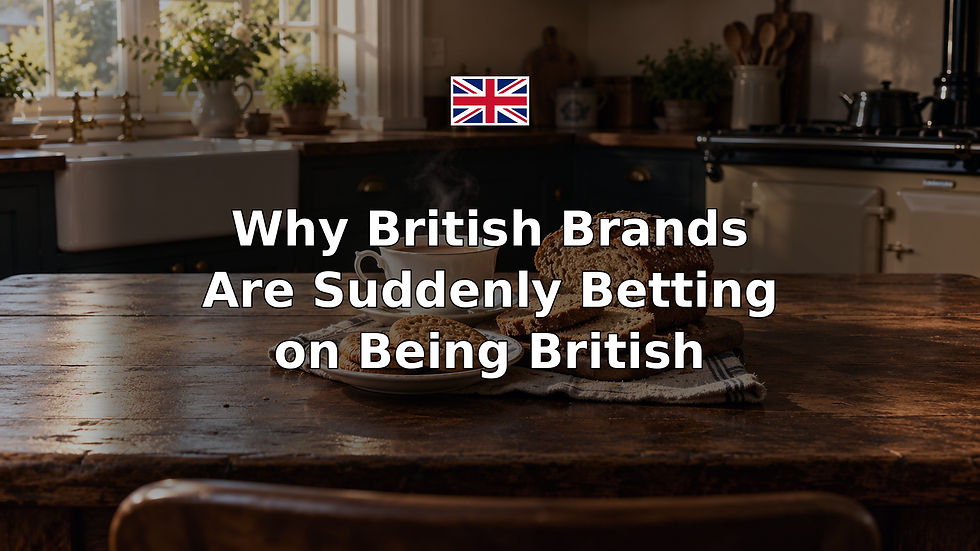
A wave of UK brands — McVitie's with 'Together', a reinvested Hovis, a resurgent Guinness — are leaning into Britishness and shared national feeling, a strategy that works brilliantly as warmth and belonging but curdles fast when it tips into exclusion or empty flag-waving.
A deliberate turn, not a coincidence
Three of Britain's most recognisable brands are pulling the same lever at once. McVitie's has put millions behind 'Together', an explicit bet on shared British moments. Hovis, under new ownership, is reinvesting to reclaim its status as a national icon. Guinness continues to mine a warm, unmistakably British-and-Irish cultural register. When this many heritage brands reach for the same idea simultaneously, it is a read on the national mood, not a fluke.
The logic is sound. In an anxious, fragmented, economically nervous market, brands that offer warmth, familiarity and a sense of belonging are offering exactly what the moment is short of. Nostalgia and national feeling are, at their best, a shortcut to emotional safety.
The tightrope
Here is where Marketing Minute would urge caution. 'Britishness' is not one thing, and the gap between unifying and alienating is narrow. Done well, it celebrates shared experience — the cup of tea, the queue, the self-deprecating humour — in a way almost everyone can see themselves in. Done badly, it slides into a narrow, exclusionary or backward-looking idea of who counts as British, and a brand that was reaching for warmth ends up picking a side.
The second trap is emptiness. A Union Jack on the packaging is not a strategy; it is decoration. The brands succeeding here are selling a feeling and a behaviour — togetherness, generosity, everyday ritual — that happens to be expressed through a British lens, not simply waving a flag and hoping patriotism does the work.
How to use national identity without getting burned
The safe and effective version of this strategy anchors on inclusive, shared behaviour rather than symbols or borders. Ask whether the idea celebrates something people do together or something that divides them into insiders and outsiders. Ask whether a newcomer to Britain would feel invited in or shut out. And make sure the national register is carrying a genuine brand truth — heritage, provenance, a real role in people's lives — not papering over the lack of one.
For UK SMEs, local and national identity can be a genuine edge against global competitors, but the same rules apply: lead with belonging, not borders. 'Made here, for people like us' only works if 'us' is drawn as widely and warmly as possible.
Britishness done well is a cup of tea and a shared joke — warm, inclusive, instantly understood. Done badly it's a flag on a pack and a quiet decision about who's in and who's out. Sell the togetherness, never the border, and you can't really go wrong. — Daniel Nikolla, Founder of Merx Marketing
National-identity branding works as belonging, not as borders. Celebrate shared behaviour; a flag on the pack is decoration, not strategy.
Does your use of 'local' or 'national' pride invite everyone in — or quietly draw a line around who belongs?
If you would like to know more about this topic, please contact us on danieln@merxmarketing.co.uk
Sources: Campaign; The Grocer; Marketing Minute analysis.
Related reading
Written by Daniel Nikolla, Founder of Merx Marketing Ltd and Marketing Minute


